Trading NVDA with SPX Direction – 10:00 AM Strategy Guide
Contact customer support at support@spxdirection.com
Overview
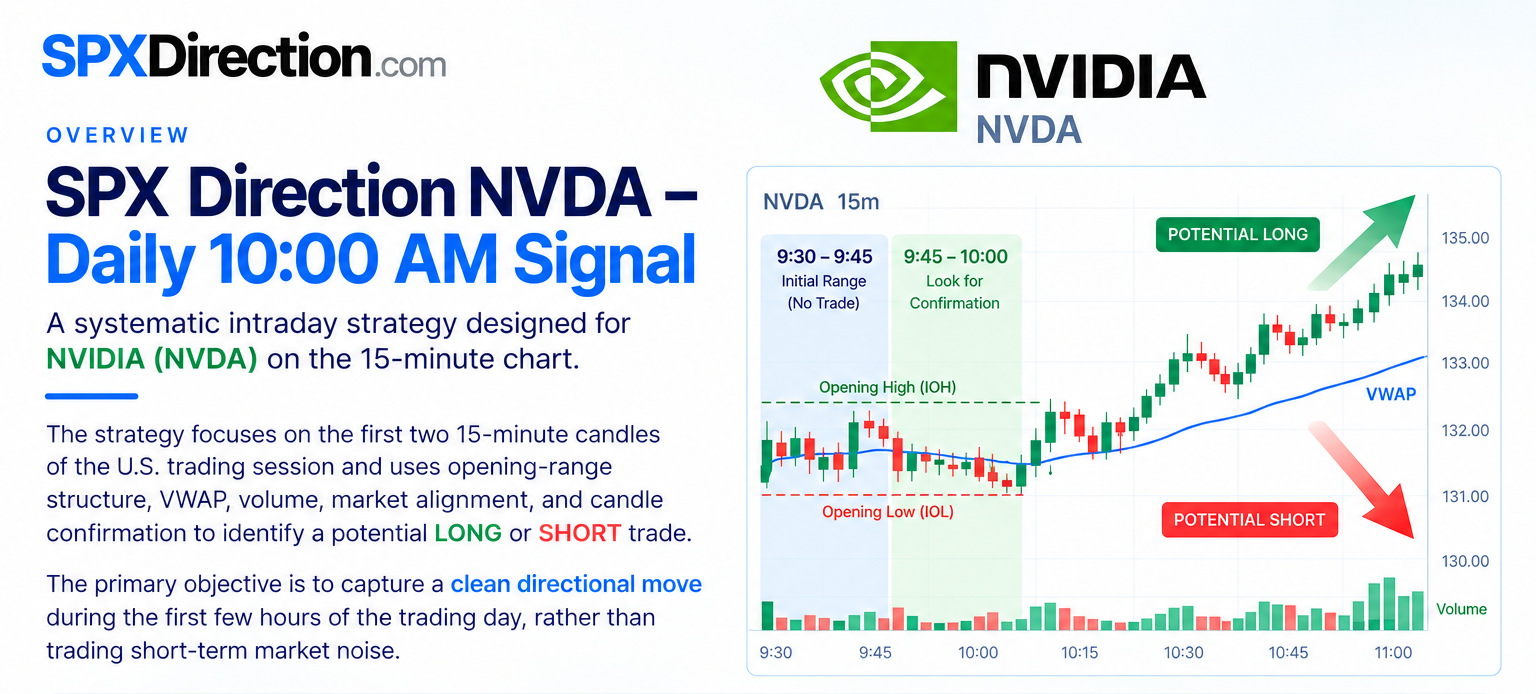
The SPX Direction NVDA – Daily 10:00 AM Signal is a systematic intraday strategy designed for NVIDIA (NVDA) on the 15-minute chart.
The strategy focuses on the first two 15-minute candles of the U.S. trading session and uses opening-range structure, VWAP, volume, market alignment, and candle confirmation to identify a potential LONG or SHORT trade.
The primary objective is to capture a clean directional move during the first few hours of the trading day, rather than trading short-term market noise.
How It Works
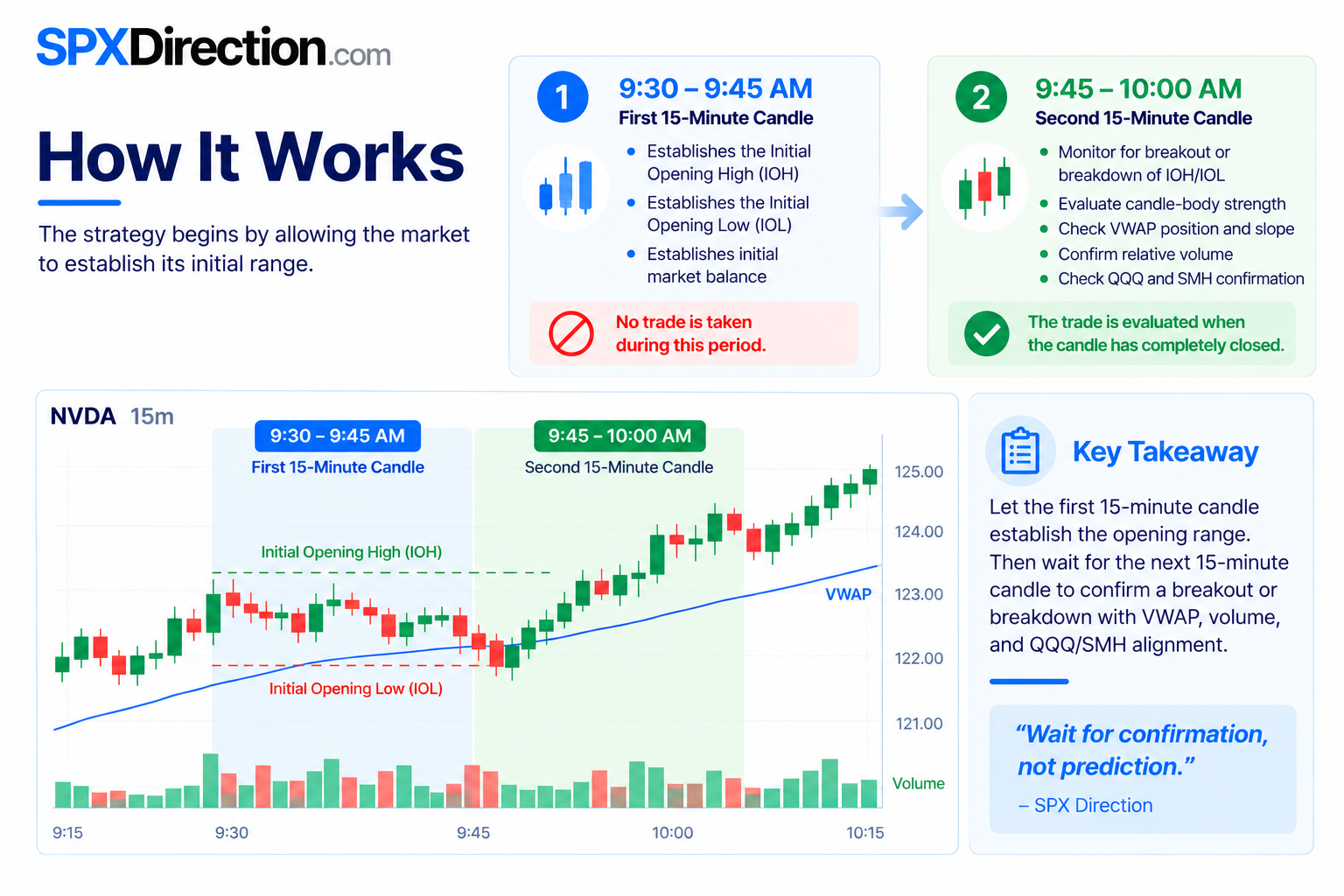
The strategy begins by allowing the market to establish its initial range.
9:30–9:45 AM
The first 15-minute candle establishes:
- Initial Opening High (IOH)
- Initial Opening Low (IOL)
- Initial market balance
No trade is taken during this period.
9:45–10:00 AM
The second 15-minute candle is monitored for:
- Breakout or breakdown of IOH/IOL
- Candle-body strength
- VWAP position and slope
- Relative volume
- QQQ and SMH confirmation
The trade is evaluated when the candle has completely closed.
10:00 AM Entry
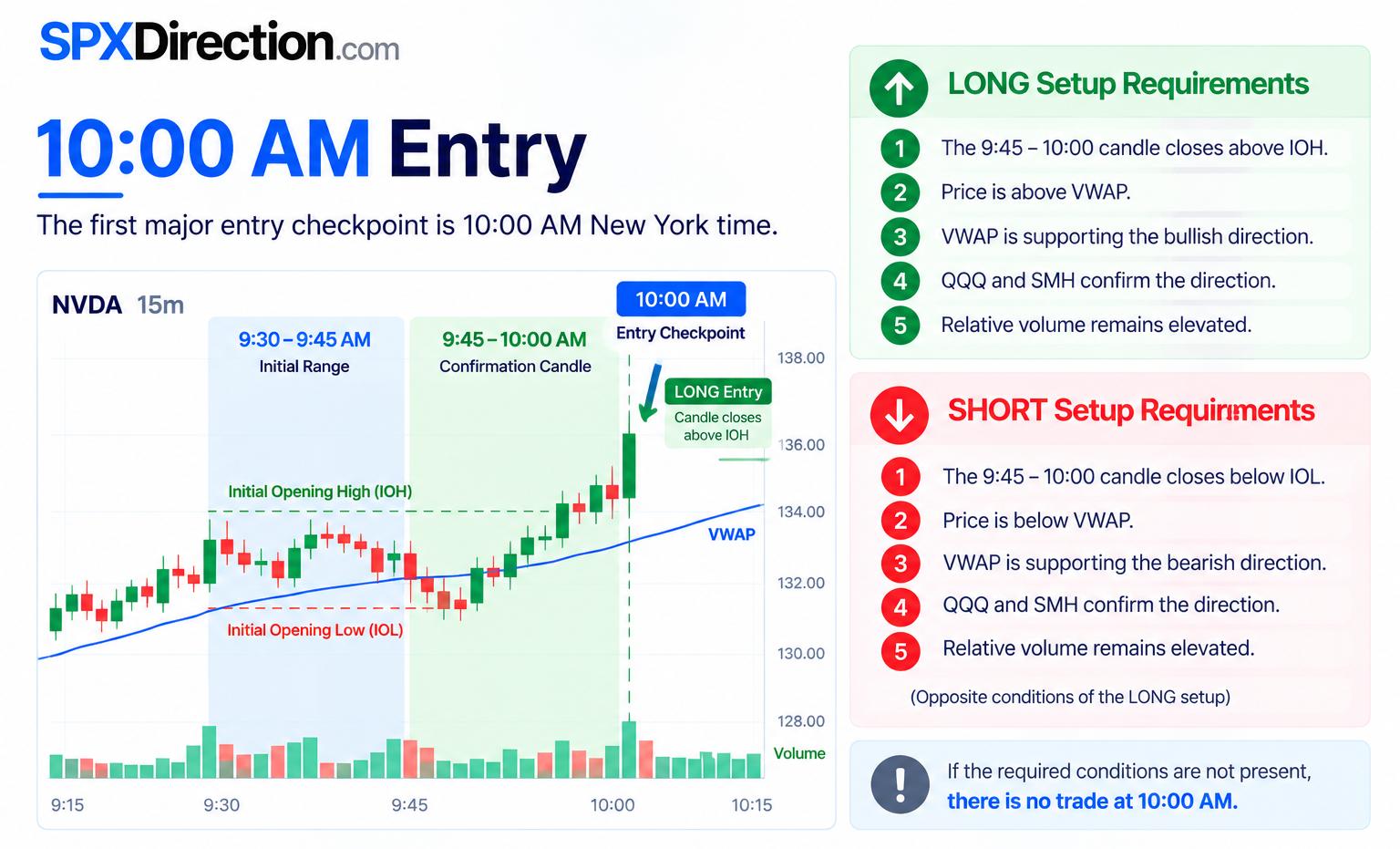
The first major entry checkpoint is 10:00 AM New York time.
A LONG setup requires:
- The 9:45–10:00 candle closes above IOH.
- Price is above VWAP.
- VWAP is supporting the bullish direction.
- QQQ and SMH confirm the direction.
- Relative volume remains elevated.
A SHORT setup uses the opposite conditions.
If the required conditions are not present, there is no trade at 10:00 AM.
Rolling Entry Windows
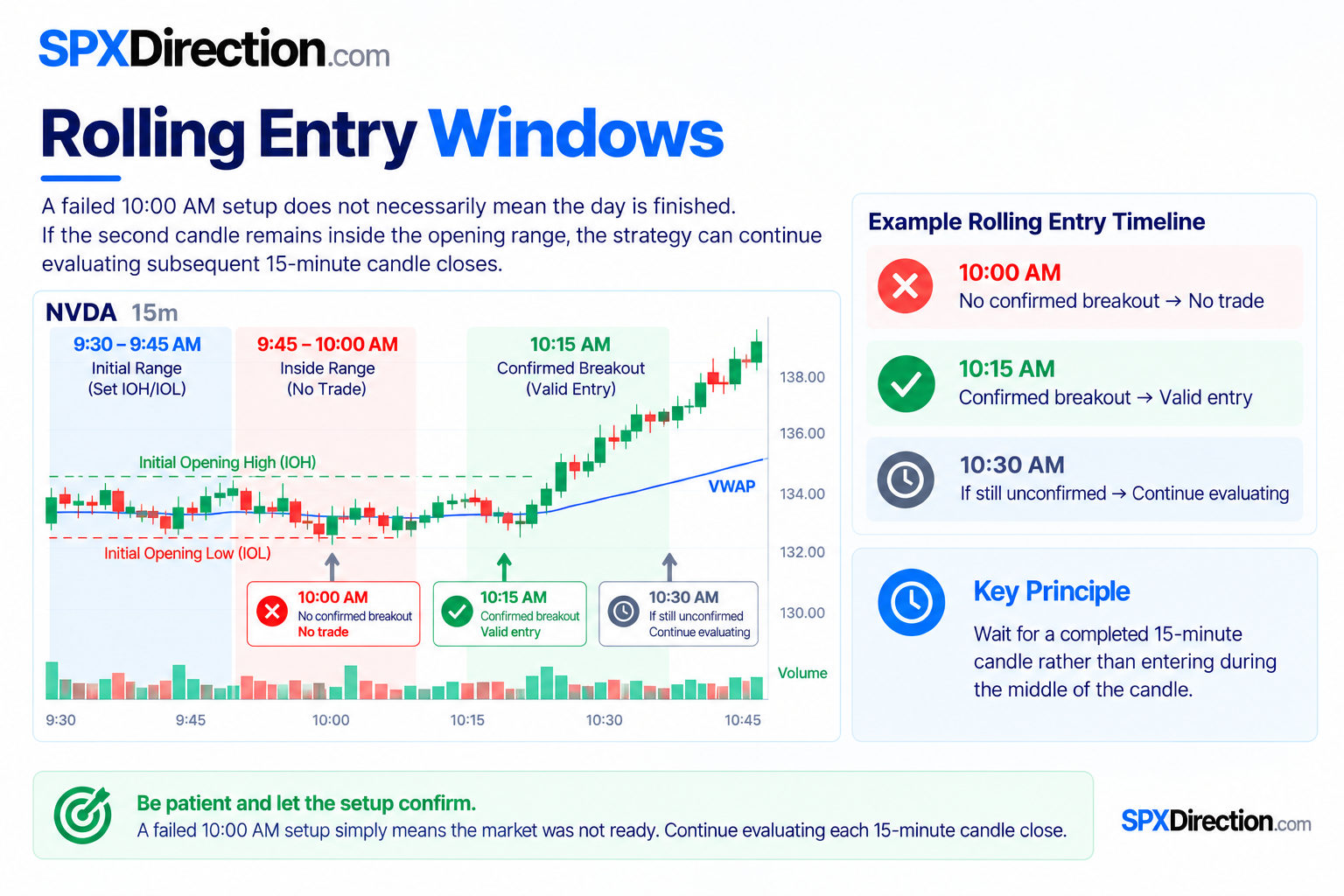
A failed 10:00 AM setup does not necessarily mean the day is finished.
If the second candle remains inside the opening range, the strategy can continue evaluating subsequent 15-minute candle closes.
For example:
- 10:00 AM: No confirmed breakout → No trade
- 10:15 AM: Confirmed breakout → Valid entry
- 10:30 AM: If still unconfirmed → Continue evaluating
The key principle is to wait for a completed 15-minute candle rather than entering during the middle of the candle.
VWAP Confirmation
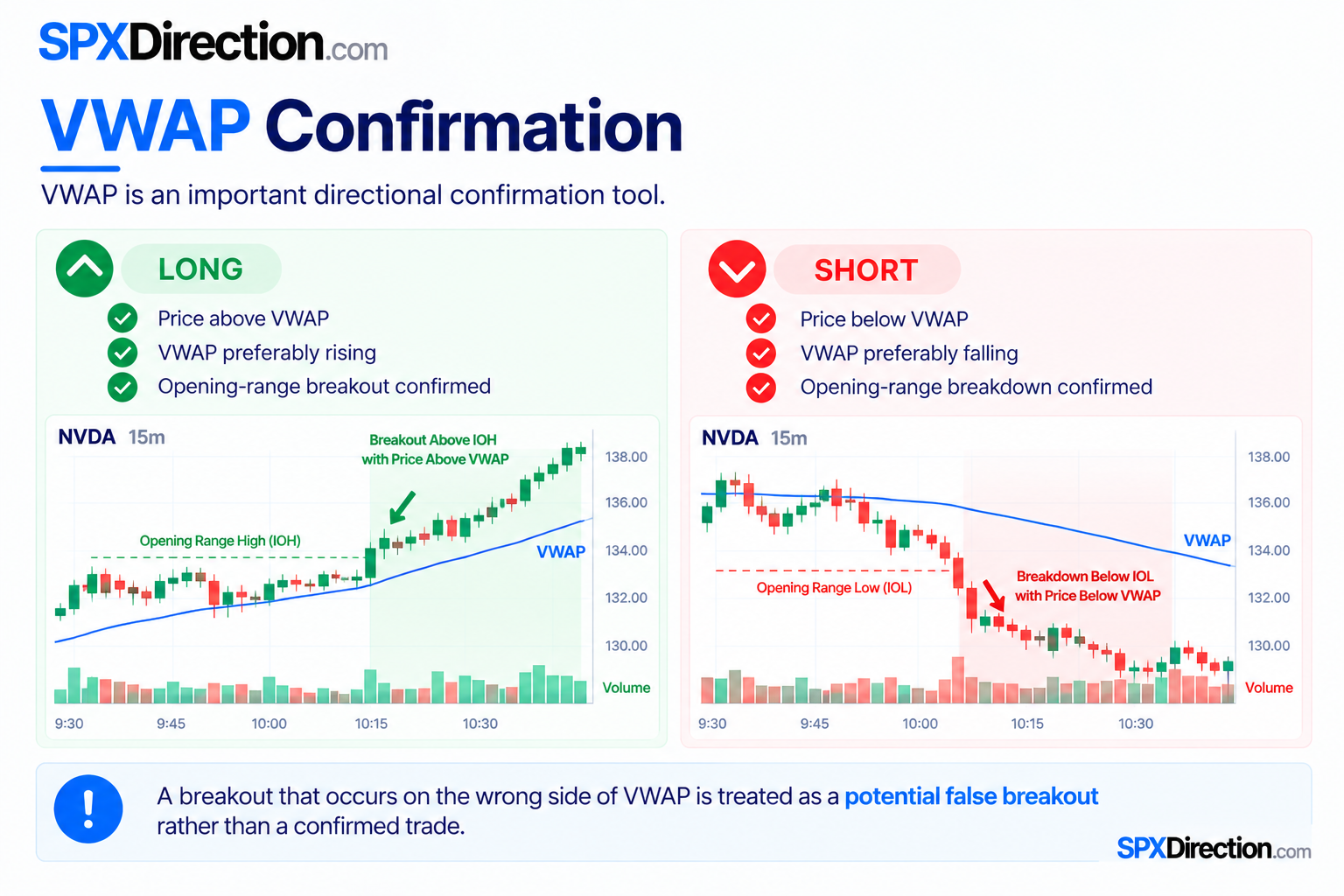
VWAP is an important directional confirmation tool.
LONG
- Price above VWAP
- VWAP preferably rising
- Opening-range breakout confirmed
SHORT
- Price below VWAP
- VWAP preferably falling
- Opening-range breakdown confirmed
A breakout that occurs on the wrong side of VWAP is treated as a potential false breakout rather than a confirmed trade.
QQQ & SMH Confirmation
NVDA is evaluated alongside:
- QQQ – broader Nasdaq/technology market
- SMH – semiconductor sector
For a LONG setup, the preferred condition is for both QQQ and SMH to support the bullish direction.
For a SHORT setup, both should support the bearish direction.
This sector confirmation helps determine whether NVDA's move is supported by the broader technology and semiconductor markets.
Relative Volume
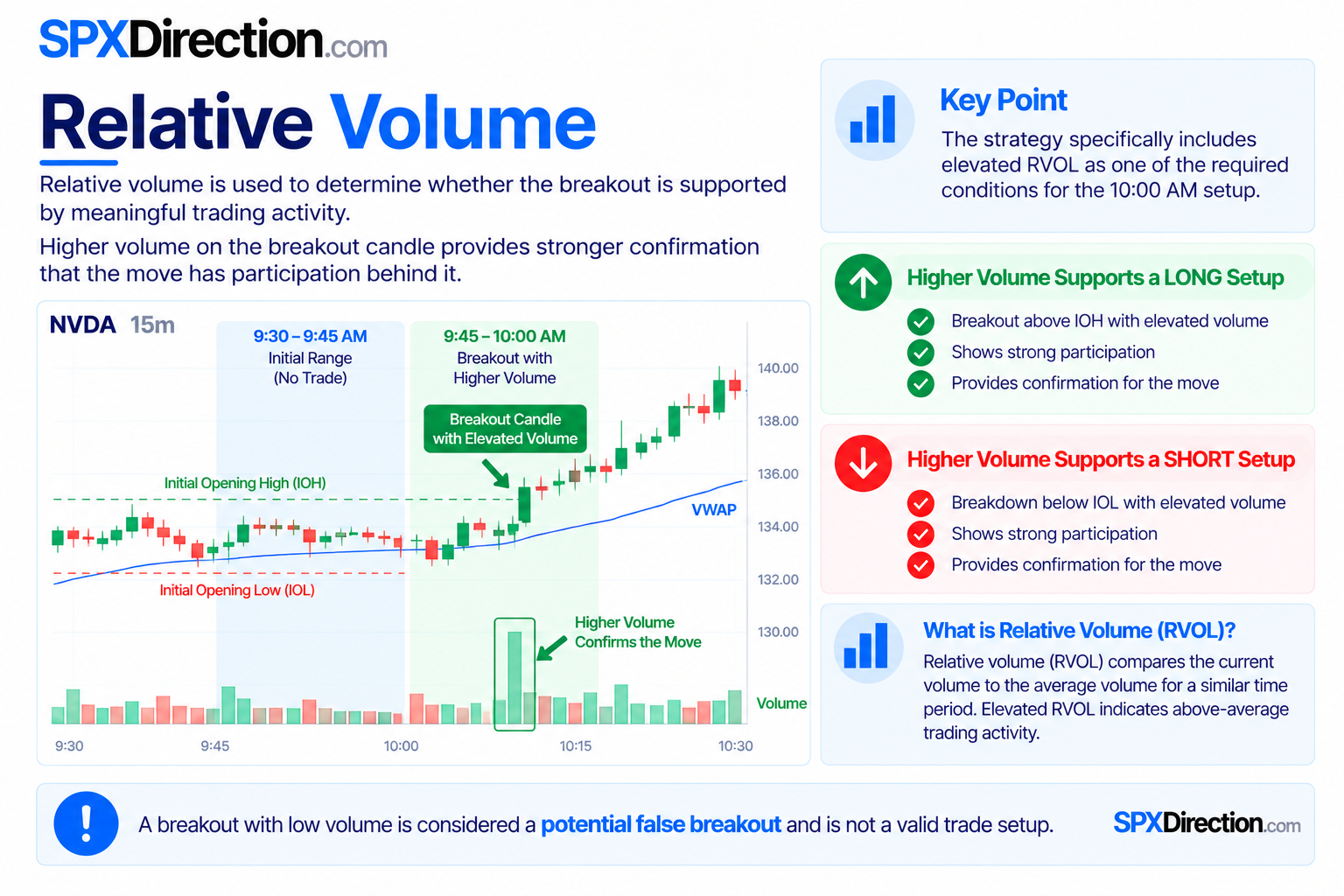
Relative volume is used to determine whether the breakout is supported by meaningful trading activity.
Higher volume on the breakout candle provides stronger confirmation that the move has participation behind it.
The strategy specifically includes elevated RVOL as one of the required conditions for the 10:00 AM setup.
Trade Quality
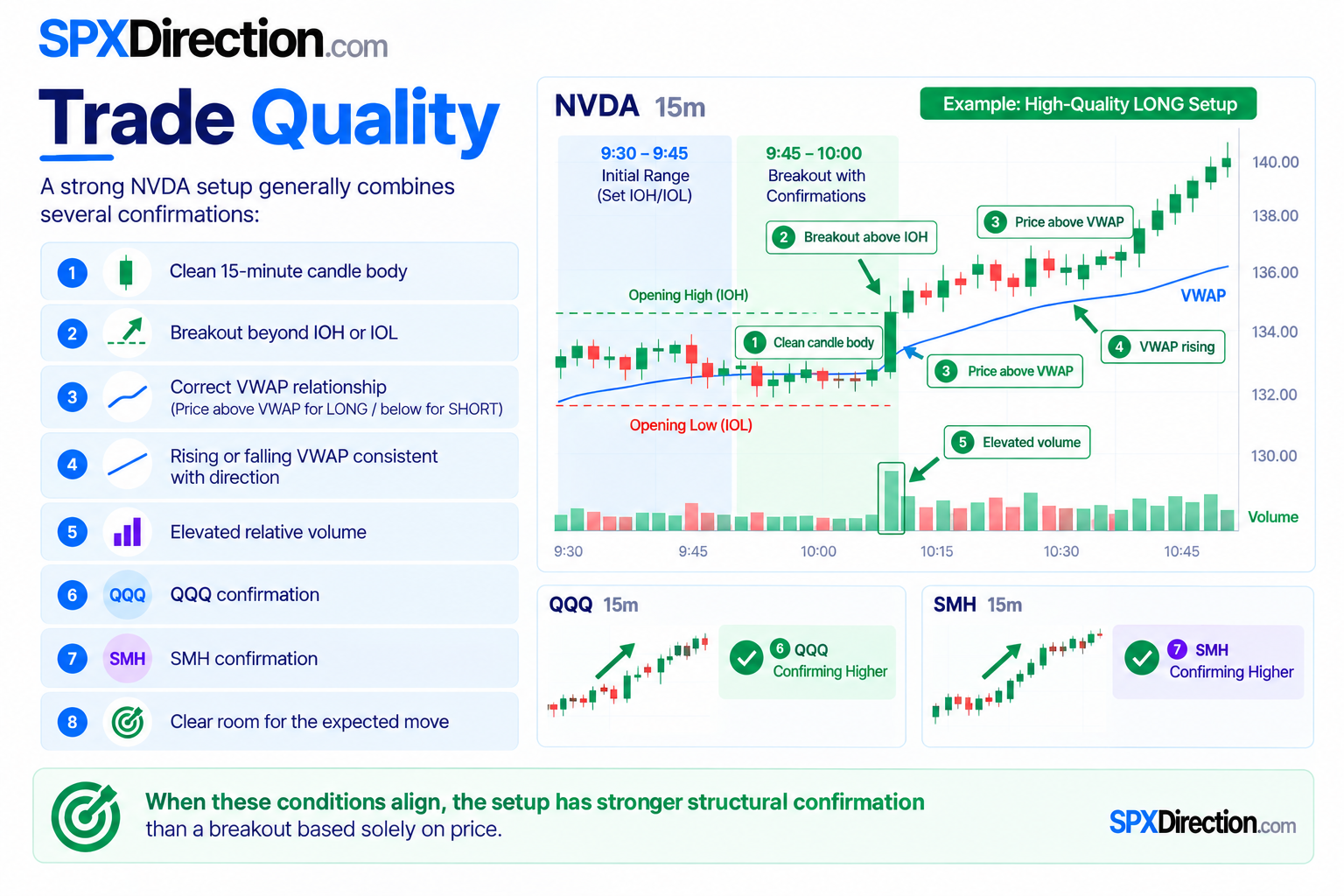
A strong NVDA setup generally combines several confirmations:
- Clean 15-minute candle body
- Breakout beyond IOH or IOL
- Correct VWAP relationship
- Rising or falling VWAP consistent with direction
- Elevated relative volume
- QQQ confirmation
- SMH confirmation
- Clear room for the expected move
When these conditions align, the setup has stronger structural confirmation than a breakout based solely on price.
Risk & Exit Management
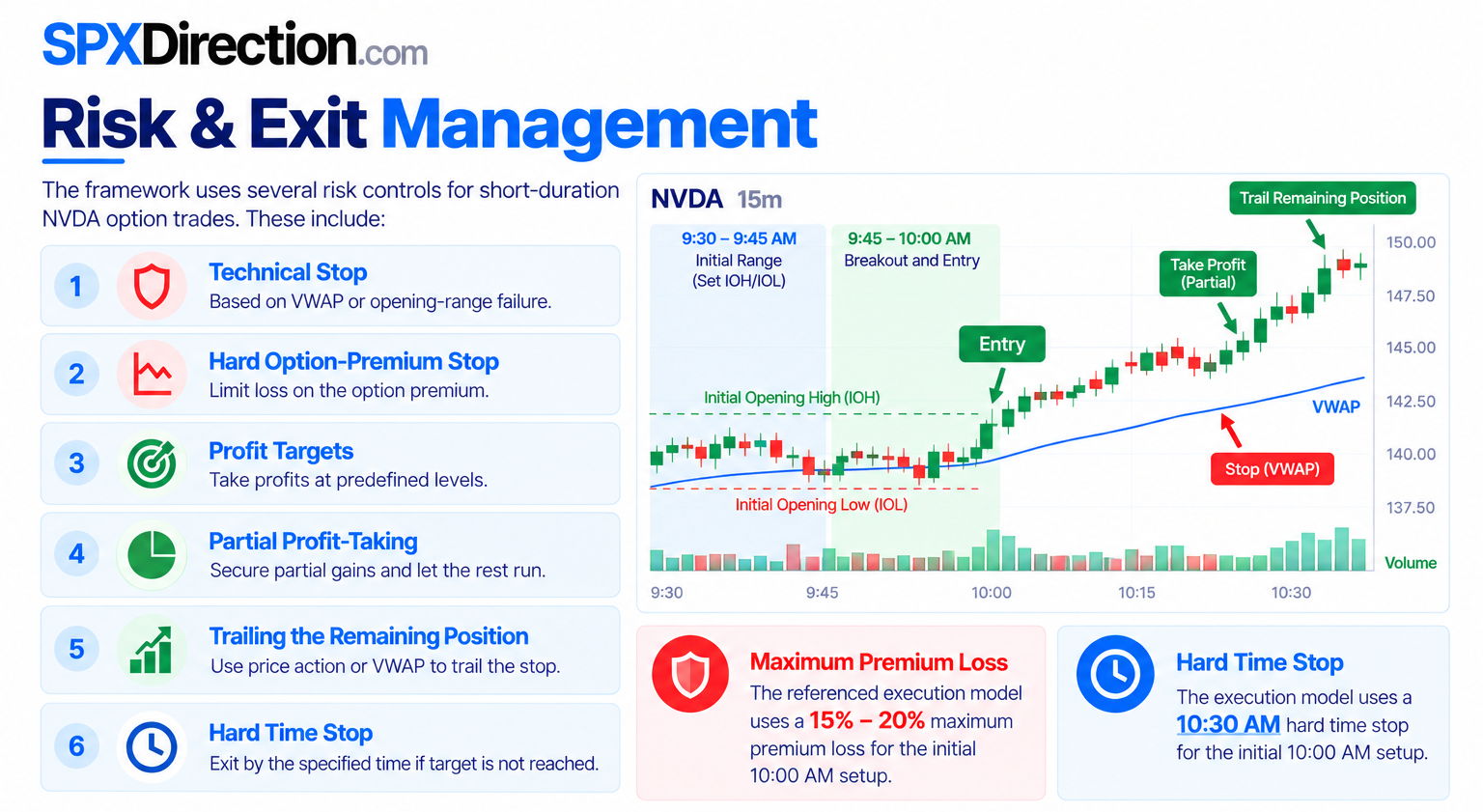
The framework uses several risk controls for short-duration NVDA option trades.
These include:
- Technical stop based on VWAP or opening-range failure
- Hard option-premium stop
- Profit targets
- Partial profit-taking
- Trailing the remaining position
- Hard time stop
The referenced execution model uses a 15%–20% maximum premium loss and a 10:30 AM hard time stop for the initial 10:00 AM setup.
Why NVDA?
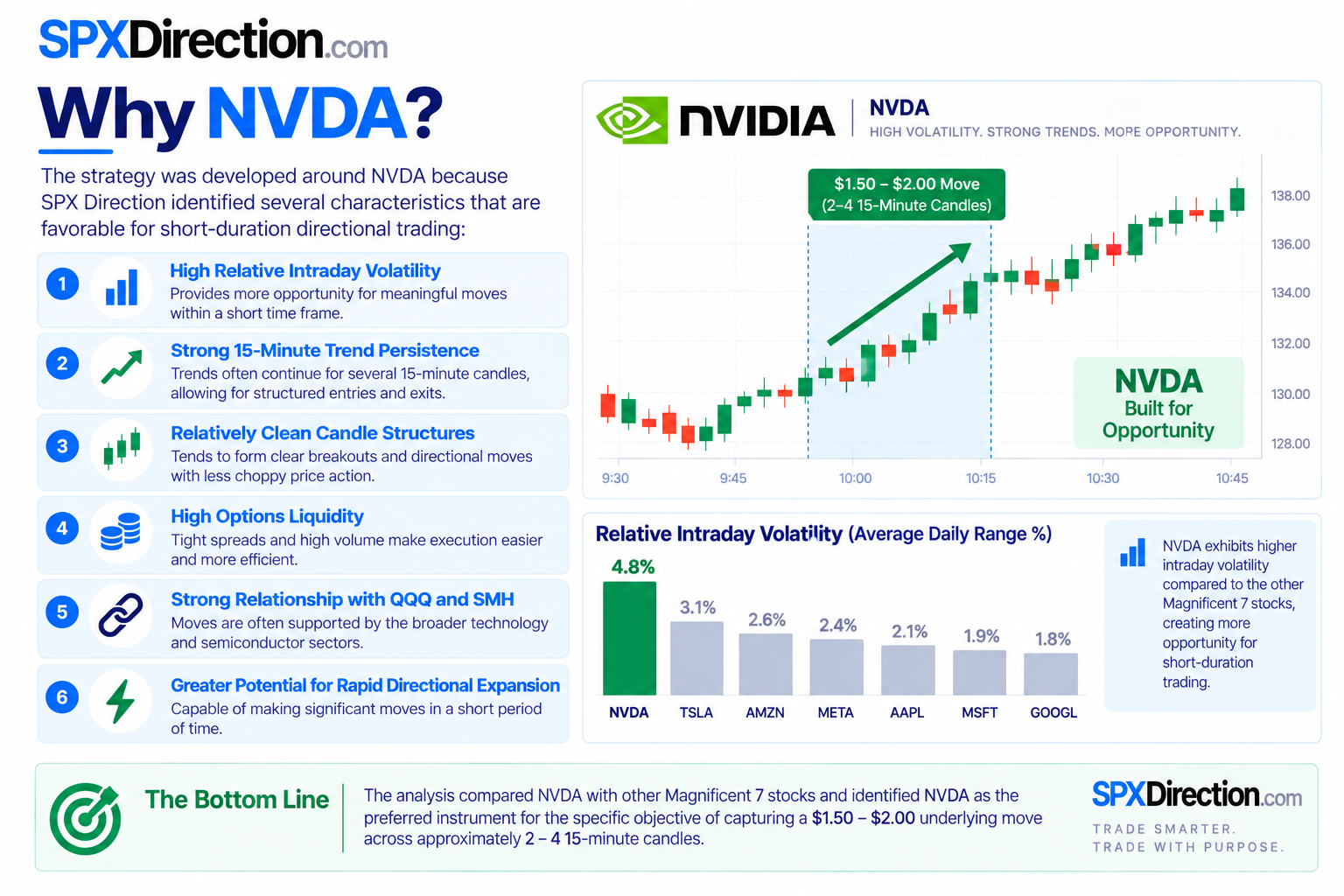
The strategy was developed around NVDA because SPX Direction identified several characteristics that are favorable for short-duration directional trading:
- High relative intraday volatility
- Strong 15-minute trend persistence
- Relatively clean candle structures
- High options liquidity
- Strong relationship with QQQ and SMH
- Greater potential for rapid directional expansion
SPX Direction compared NVDA with other Magnificent 7 stocks and identified NVDA as the preferred instrument for the specific objective of capturing a $1.50–$2.00 underlying move across approximately 2–4 15-minute candles.
Recommended Settings
For the intended strategy framework, use:
- Symbol: NVDA
- Timeframe: 15 Minutes
- Session: Regular U.S. Market Hours
- Time Zone: America/New_York
- Primary Entry: 10:00 AM or the next confirmed 15-minute candle
- Preferred Trading Window: First 2–3 hours of the session
The strategy should not be evaluated by entering during the initial 9:30–9:45 AM candle because the opening range has not yet been established.
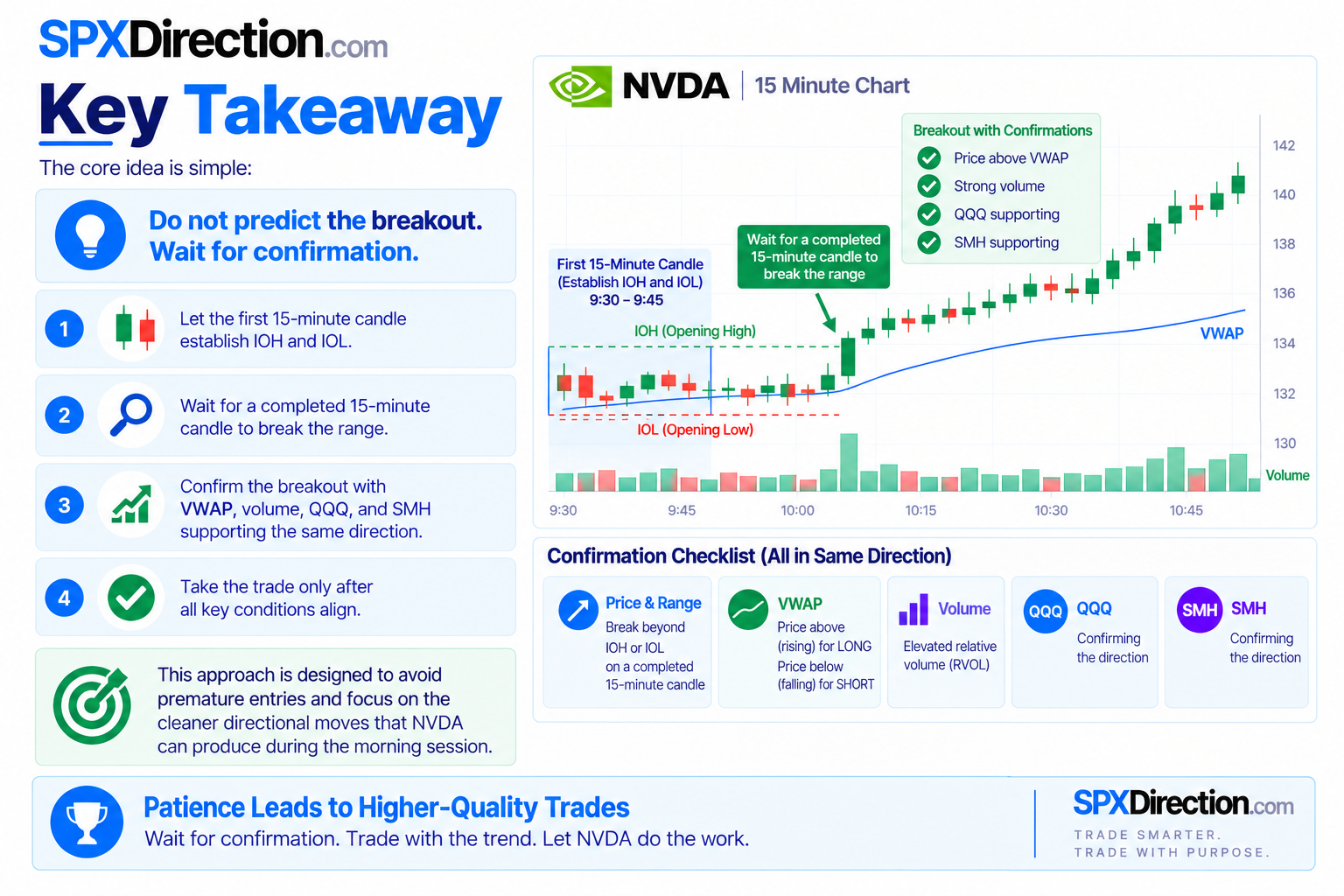
Key Takeaway
The core idea is simple:
Do not predict the breakout. Wait for confirmation.
Let the first 15-minute candle establish IOH and IOL. Then wait for a completed 15-minute candle to break the range with VWAP, volume, QQQ, and SMH supporting the same direction.
This approach is designed to avoid premature entries and focus on the cleaner directional moves that NVDA can produce during the morning session.