SPX Direction AMZN Daily 10:00 AM Signal
Contact customer support at support@spxdirection.com
Overview
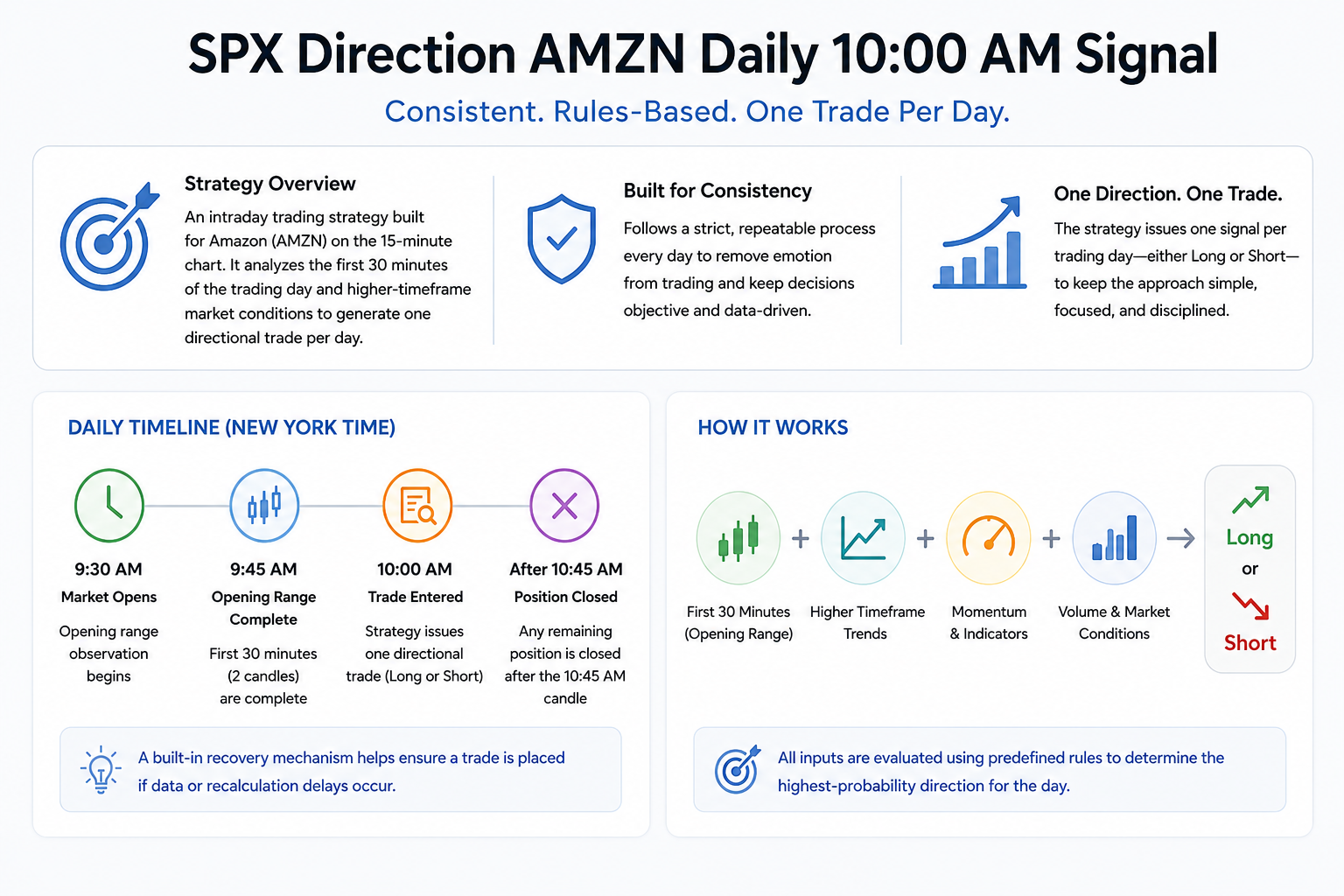
The SPX Direction AMZN Daily 10:00 AM Signal is an intraday trading strategy built specifically for Amazon (AMZN) on the 15-minute chart.
The strategy analyzes the first 30 minutes of the trading day, combines that information with higher-timeframe market conditions, and generates one directional trade (Long or Short) per trading day.
Its goal is consistency by following the same rules every day rather than relying on emotions or discretionary decisions.
How It Works
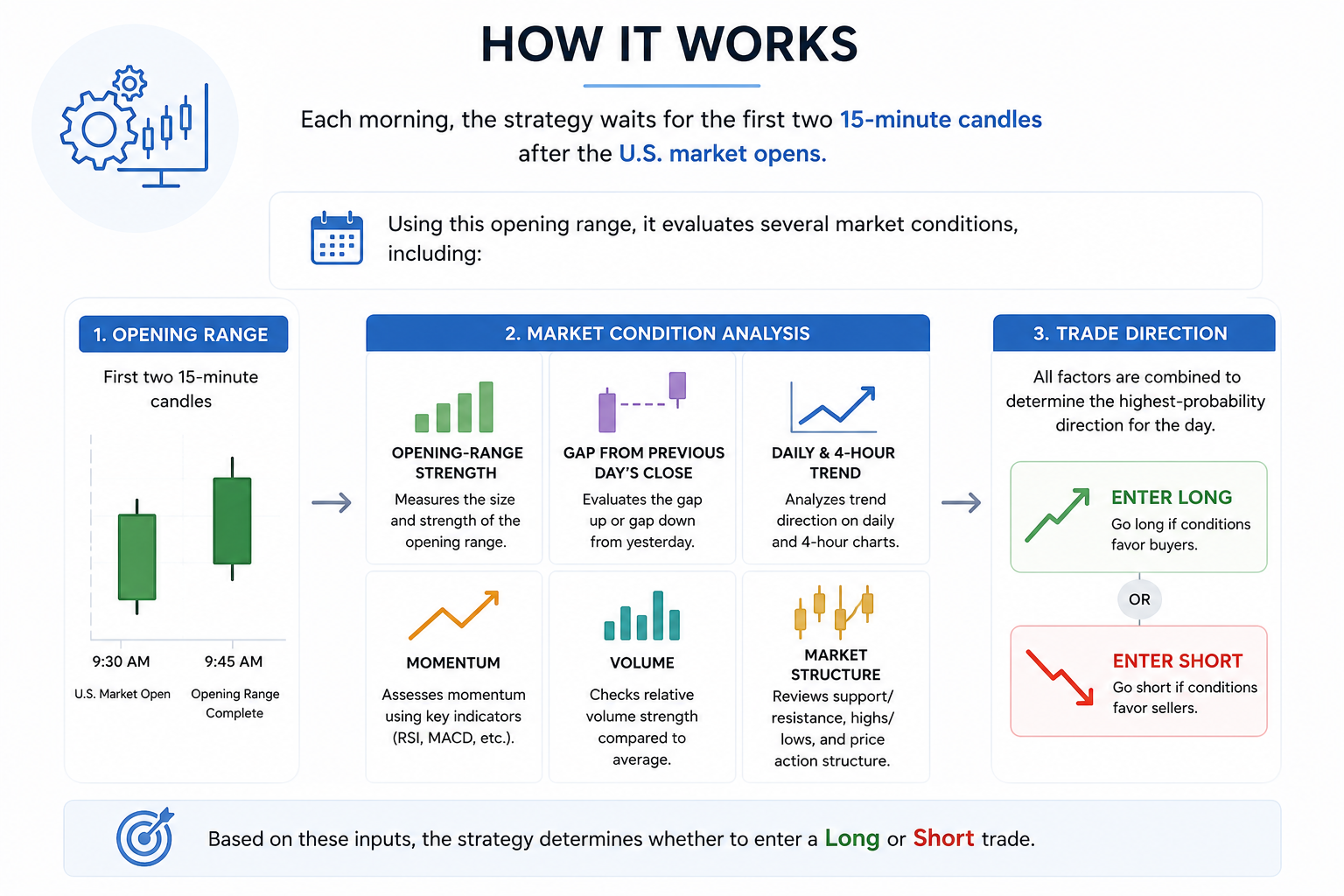
Each morning, the strategy waits for the first two 15-minute candles after the U.S. market opens.
Using this opening range, it evaluates several market conditions, including:
- Opening-range strength
- Gap from the previous day's close
- Daily and 4-hour trend
- Momentum
- Volume
- Market structure
Based on these inputs, the strategy determines whether to enter a Long or Short trade.
Trading Schedule
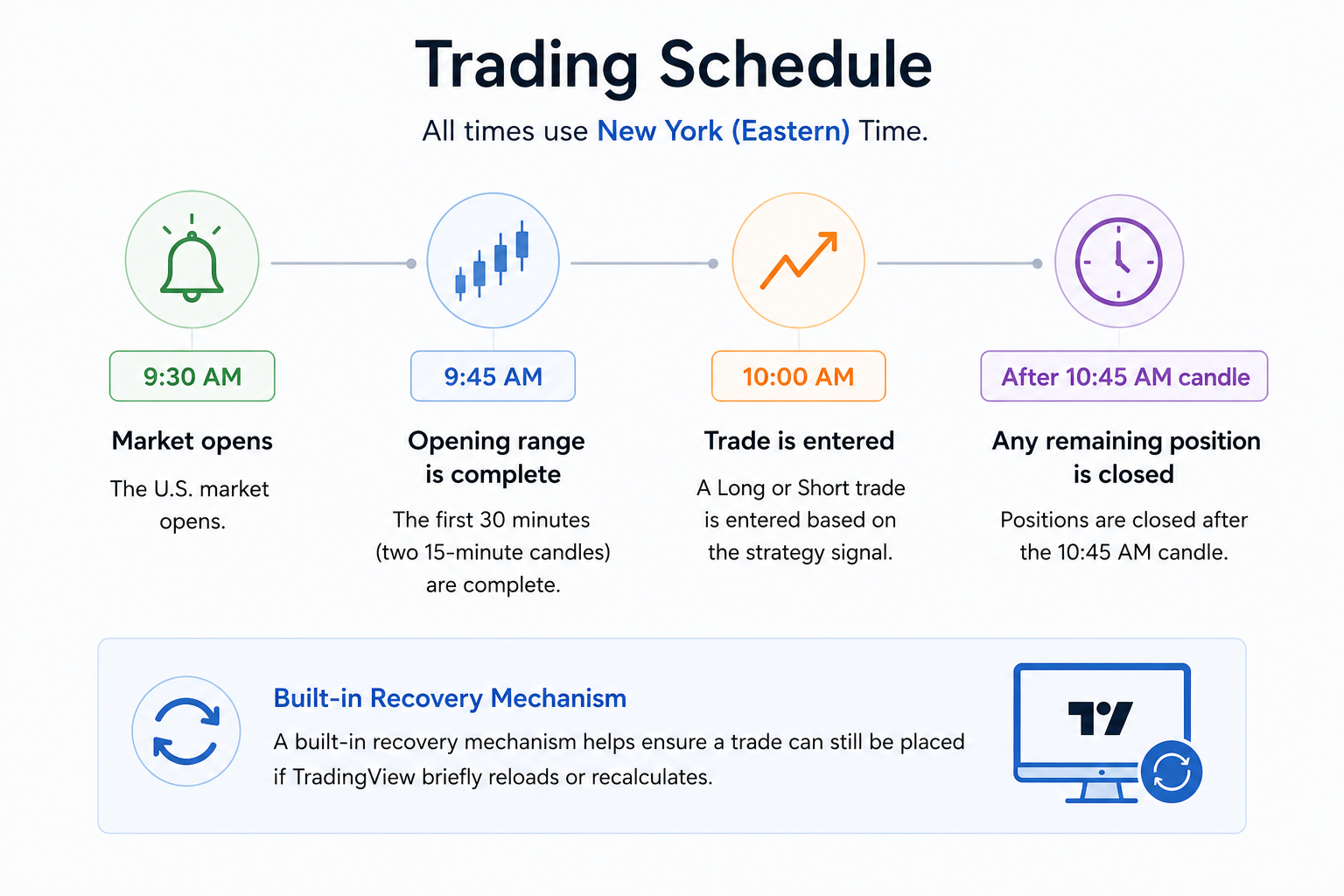
All times use New York (Eastern) Time.
|
|
|
|
|
|
|
|
|
|
|
|
|
|
|
A built-in recovery mechanism helps ensure a trade can still be placed if TradingView briefly reloads or recalculates.
Setup Classification
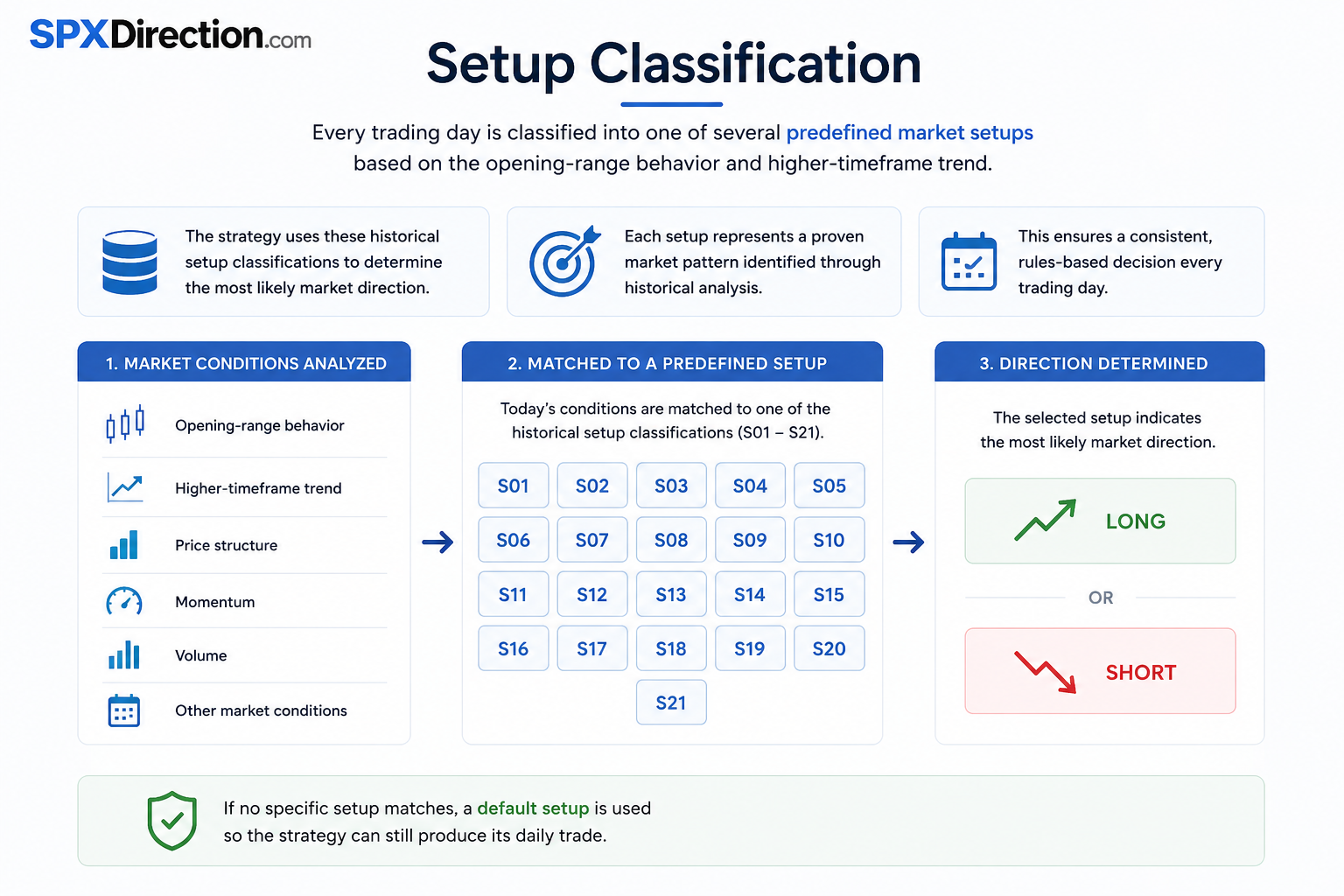
Every trading day is classified into one of several predefined market setups based on the opening-range behavior and higher-timeframe trend.
The strategy uses these historical setup classifications to determine the most likely market direction.
If no specific setup matches, a default setup is used so the strategy can still produce its daily trade.
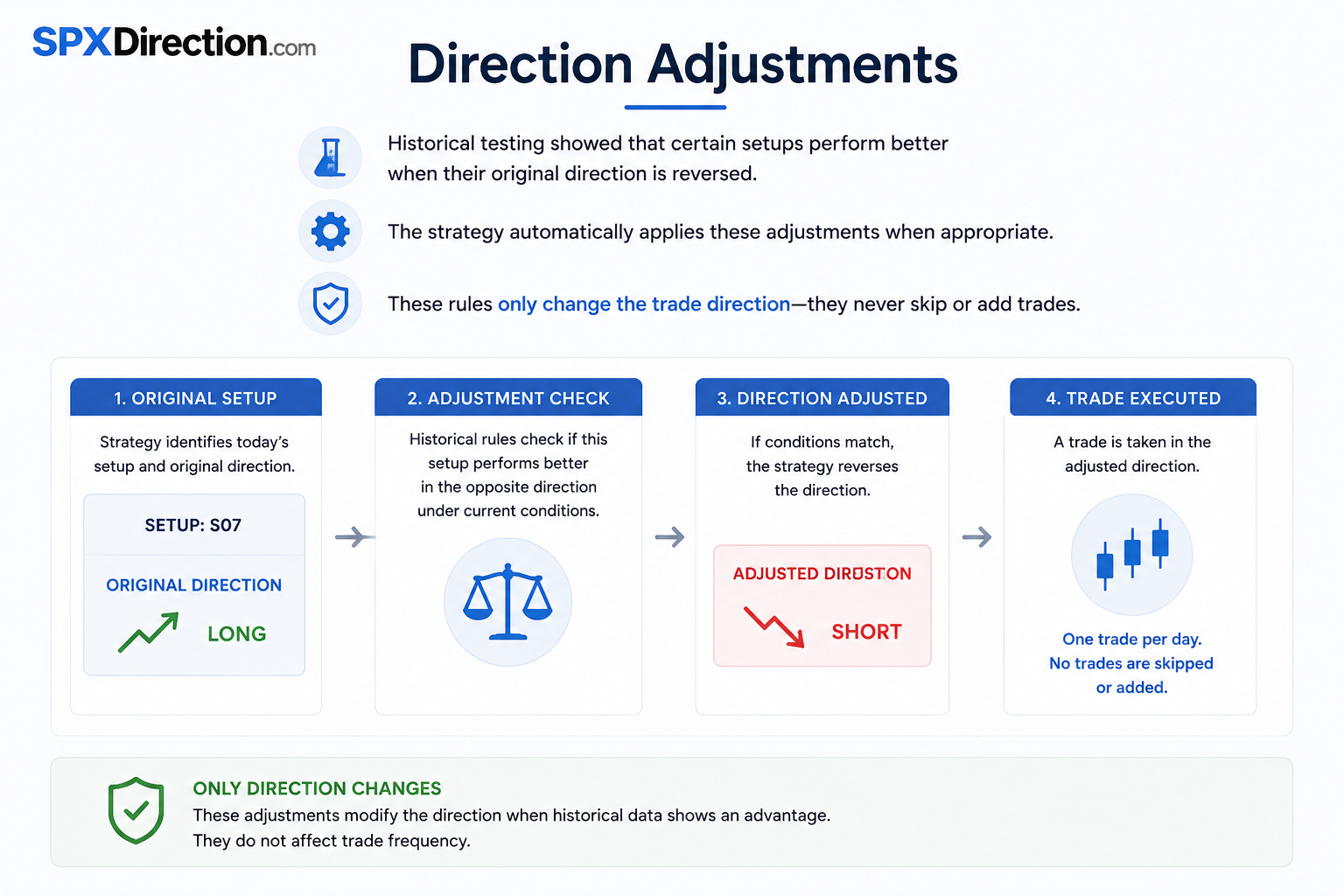
Direction Adjustments
Historical testing showed that certain setups perform better when their original direction is reversed.
The strategy automatically applies these adjustments when appropriate.
These rules only change the trade direction—they never skip or add trades.
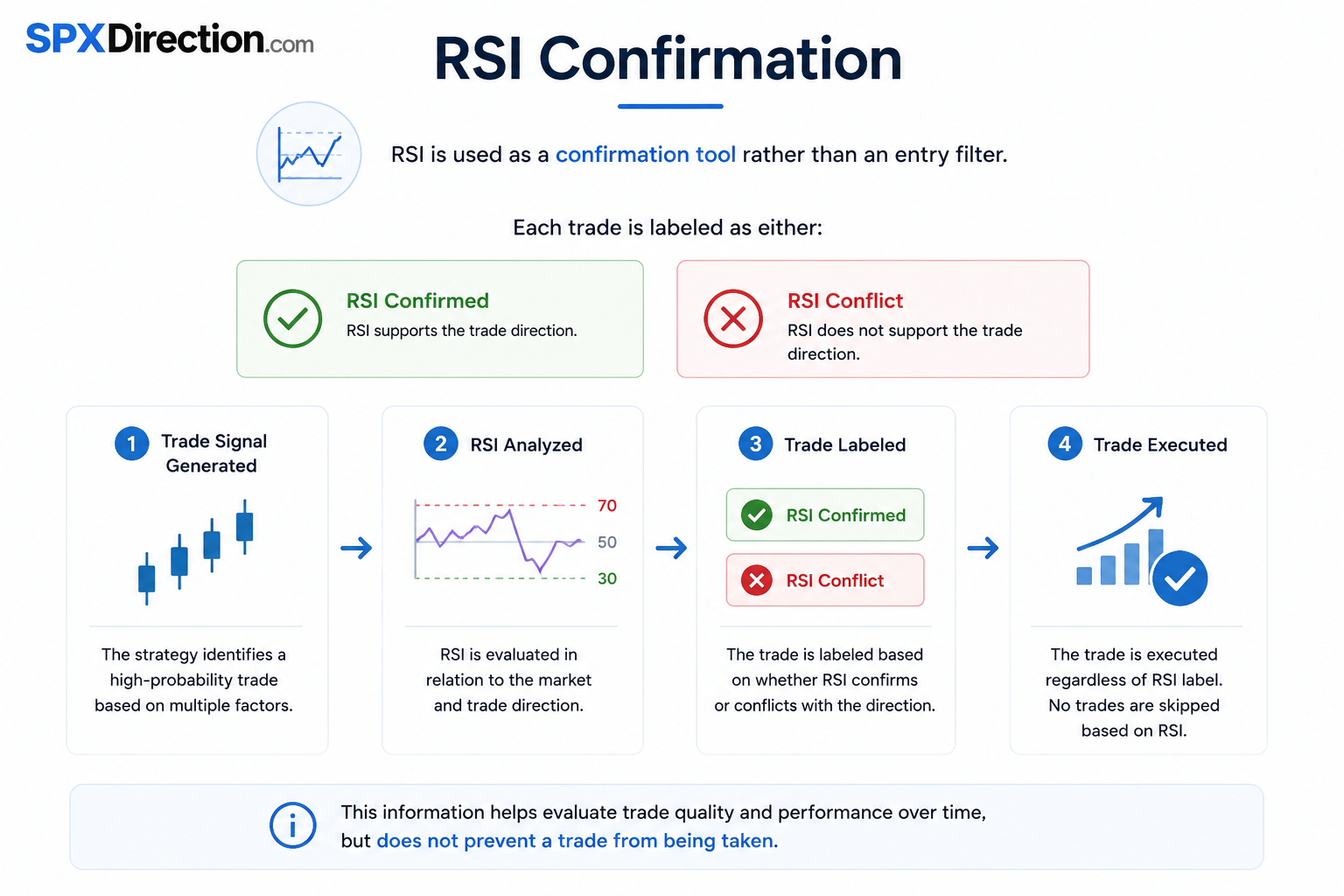
RSI Confirmation
RSI is used as a confirmation tool rather than an entry filter.
Each trade is labeled as either:
- RSI Confirmed
- RSI Conflict
This information helps evaluate trade quality but does not prevent a trade from being taken.
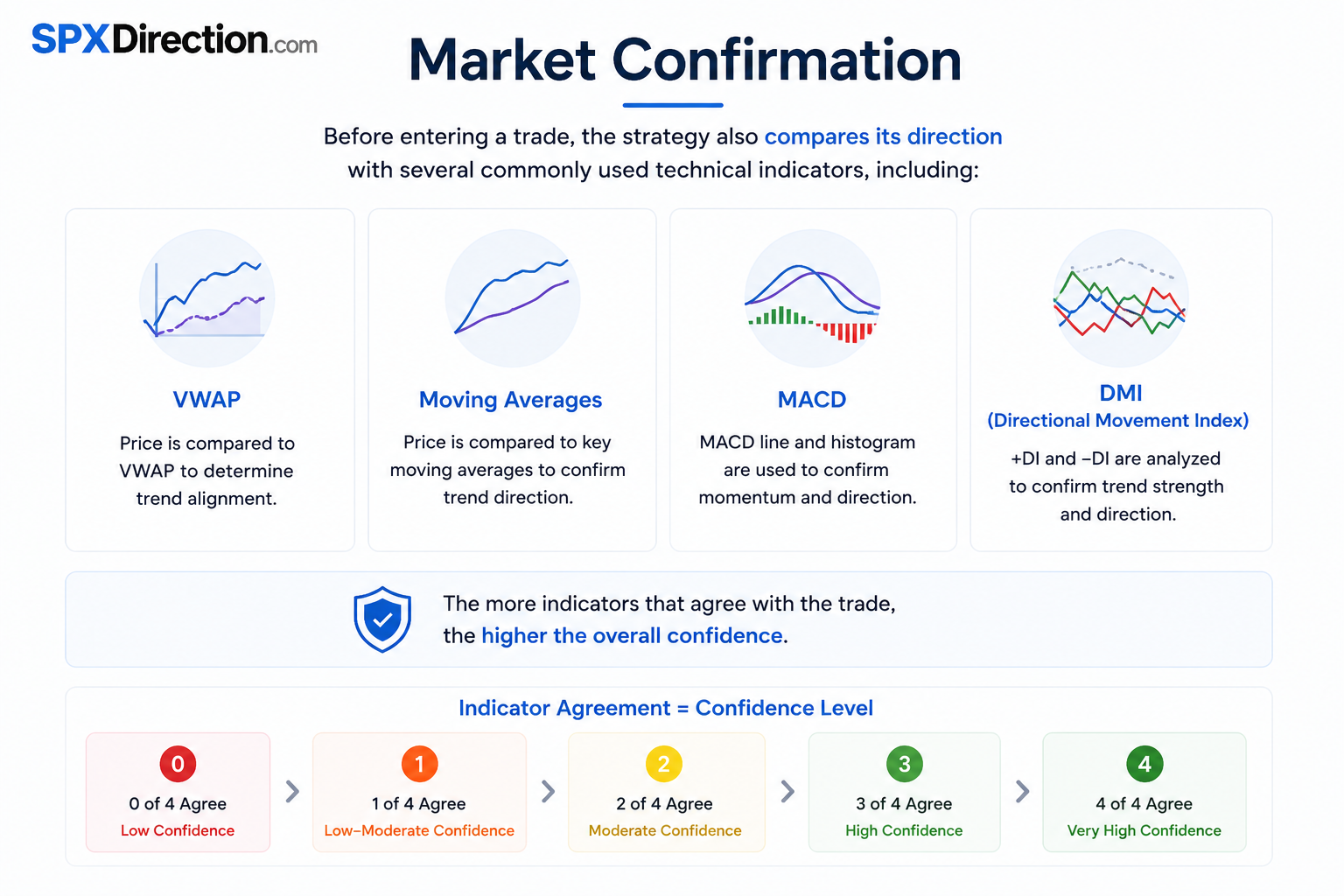
Market Confirmation
Before entering a trade, the strategy also compares its direction with several commonly used technical indicators, including:
- VWAP
- Moving Averages
- MACD
- DMI (Directional Movement Index)
The more indicators that agree with the trade, the higher the overall confidence.
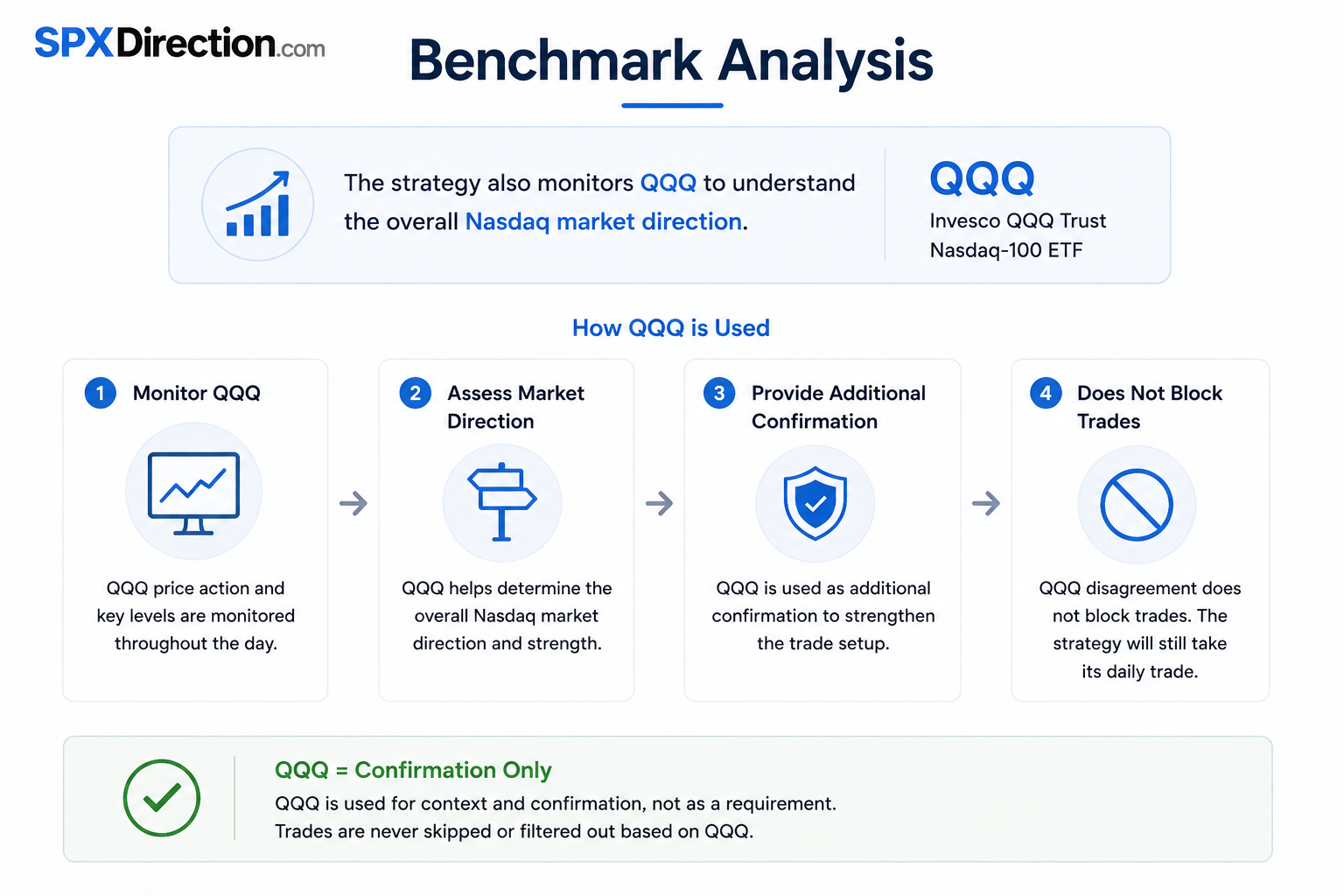
Benchmark Analysis
The strategy also monitors QQQ to understand the overall Nasdaq market direction.
QQQ is used as additional confirmation only and does not block trades.
Position Sizing
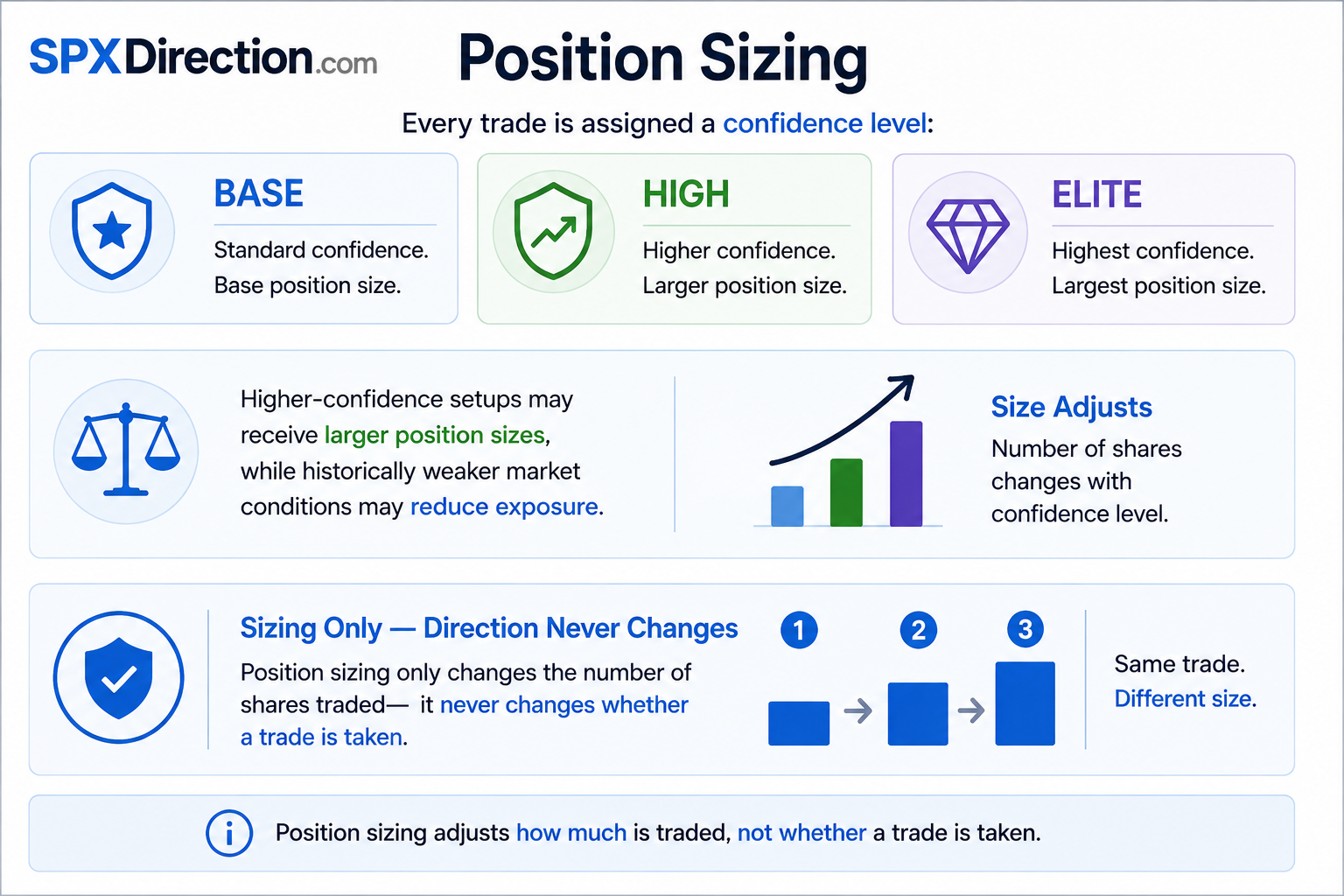
Every trade is assigned a confidence level:
- Base
- High
- Elite
Higher-confidence setups may receive larger position sizes, while historically weaker market conditions may reduce exposure.
Position sizing only changes the number of shares traded—it never changes whether a trade is taken.
Risk Management
The default stop loss is based on the size of the opening range.
Profit targets are calculated using a configurable reward-to-risk ratio.
Additional features such as trailing stops, break-even protection, and adaptive exits are available but are disabled by default.
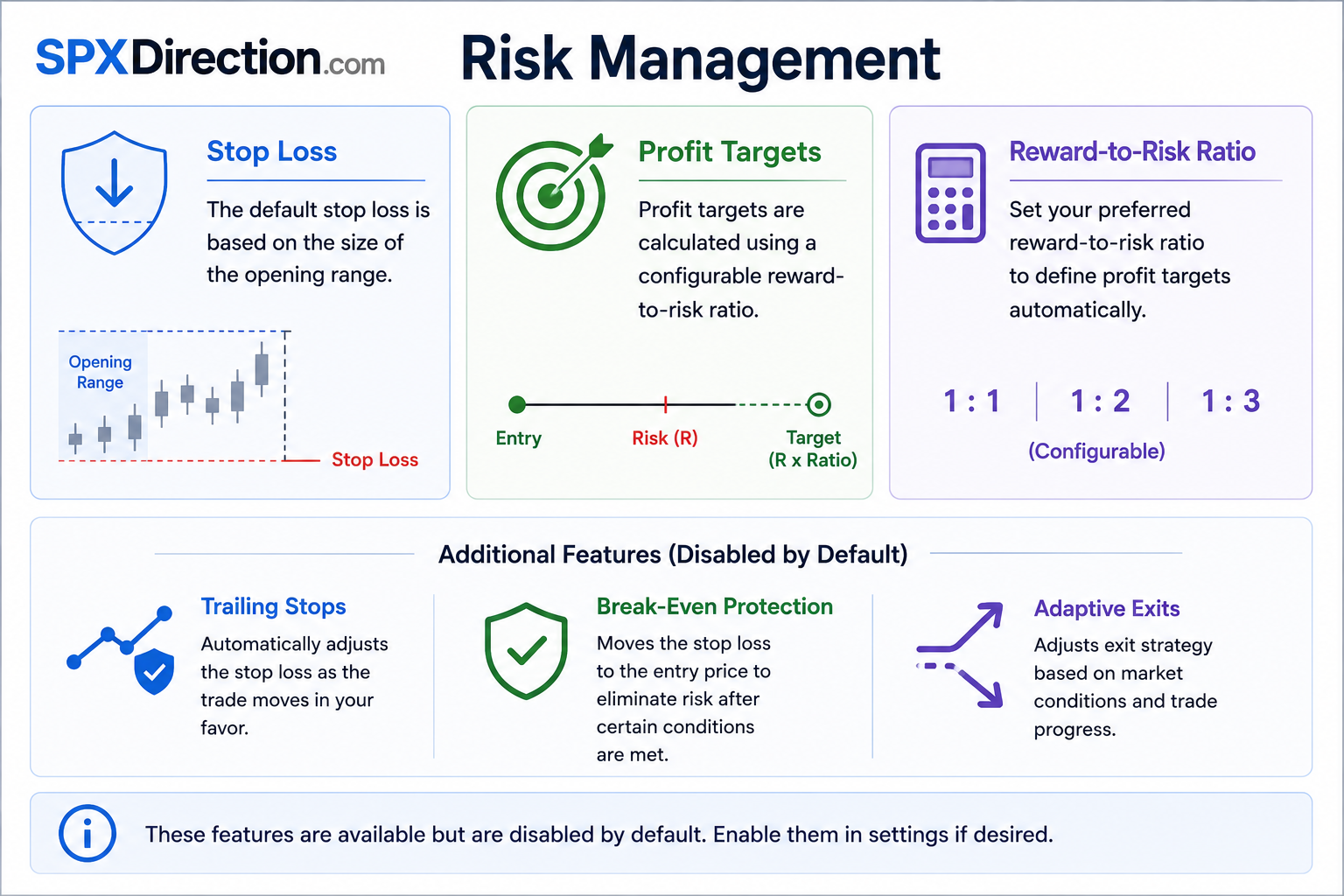
Chart Features
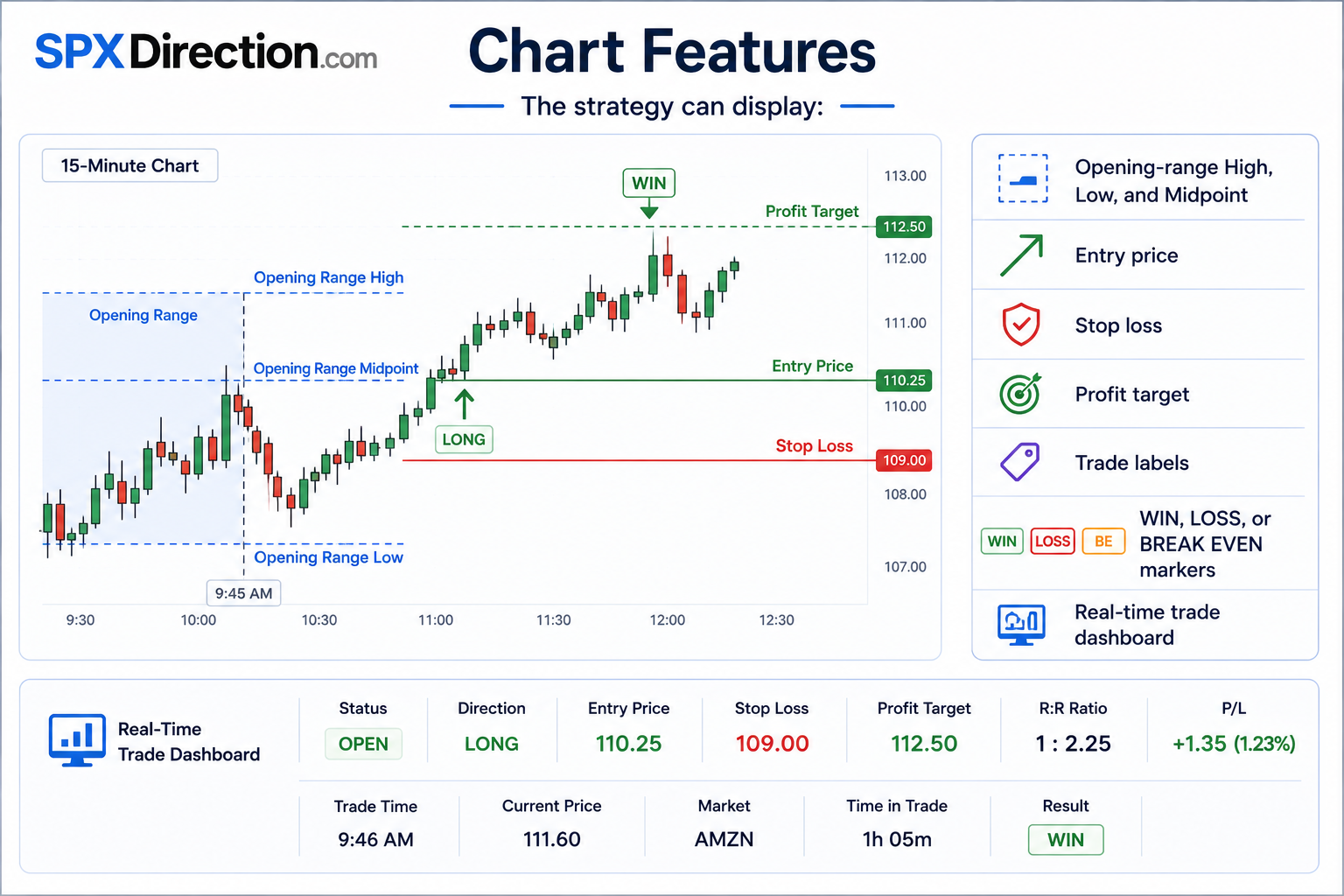
The strategy can display:
- Opening-range High, Low, and Midpoint
- Entry price
- Stop loss
- Profit target
- Trade labels
- WIN, LOSS, or BREAK EVEN markers
- Real-time trade dashboard
Trade Dashboard
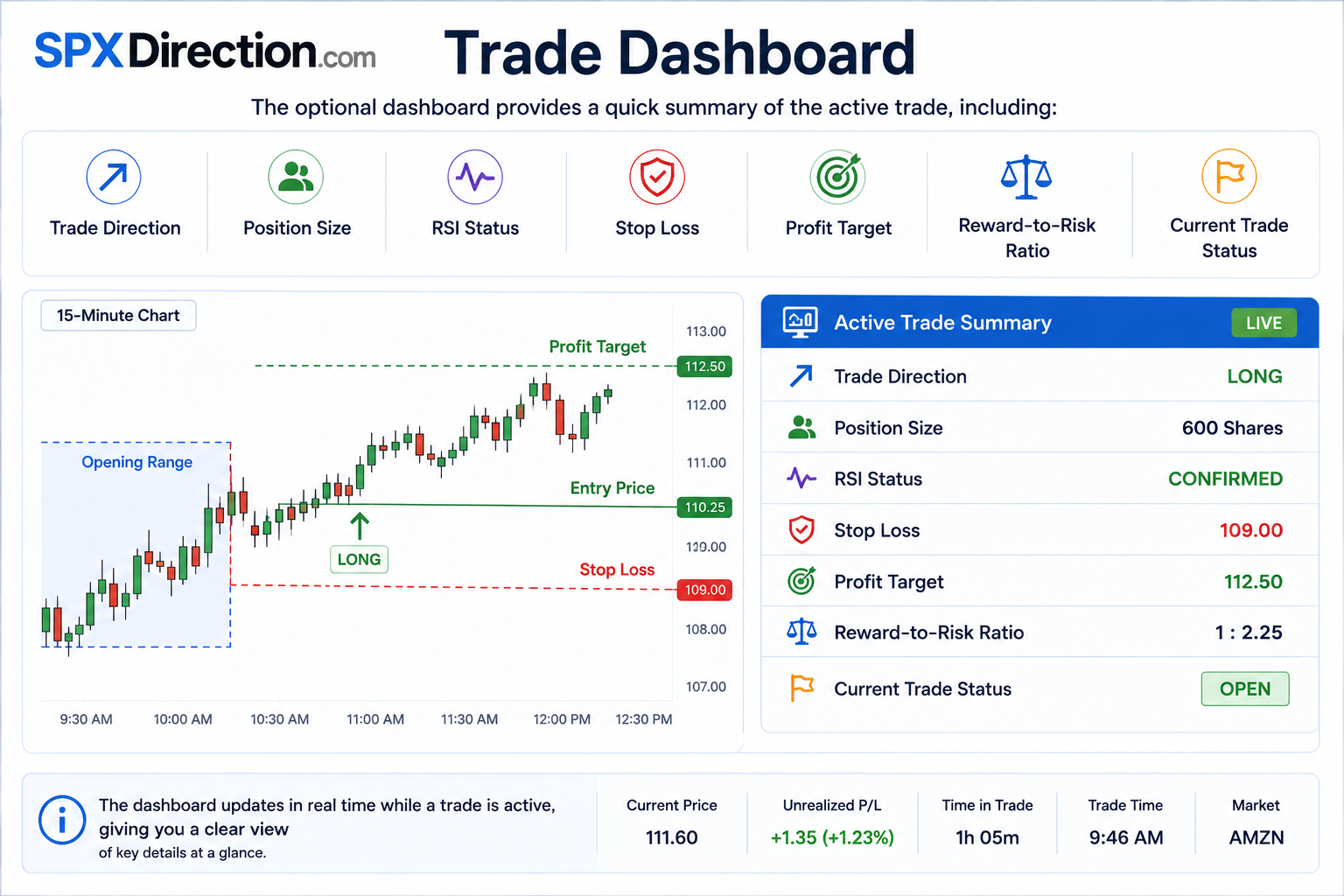
The optional dashboard provides a quick summary of the active trade, including:
- Trade direction
- Position size
- RSI status
- Stop loss
- Profit target
- Reward-to-risk ratio
- Current trade status
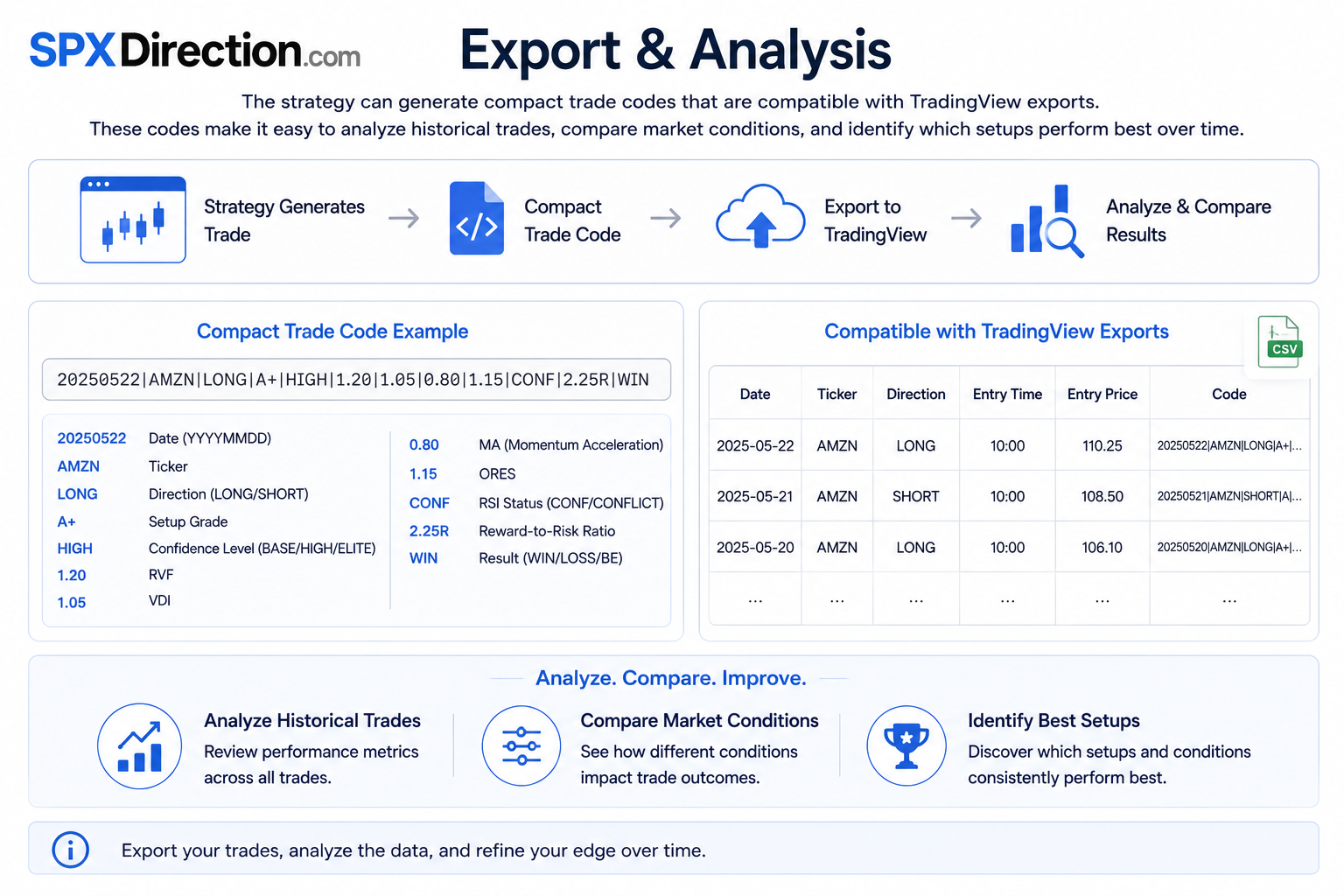
Export & Analysis
The strategy can generate compact trade codes that are compatible with TradingView exports.
These codes make it easy to analyze historical trades, compare market conditions, and identify which setups perform best over time.
Recommended Settings
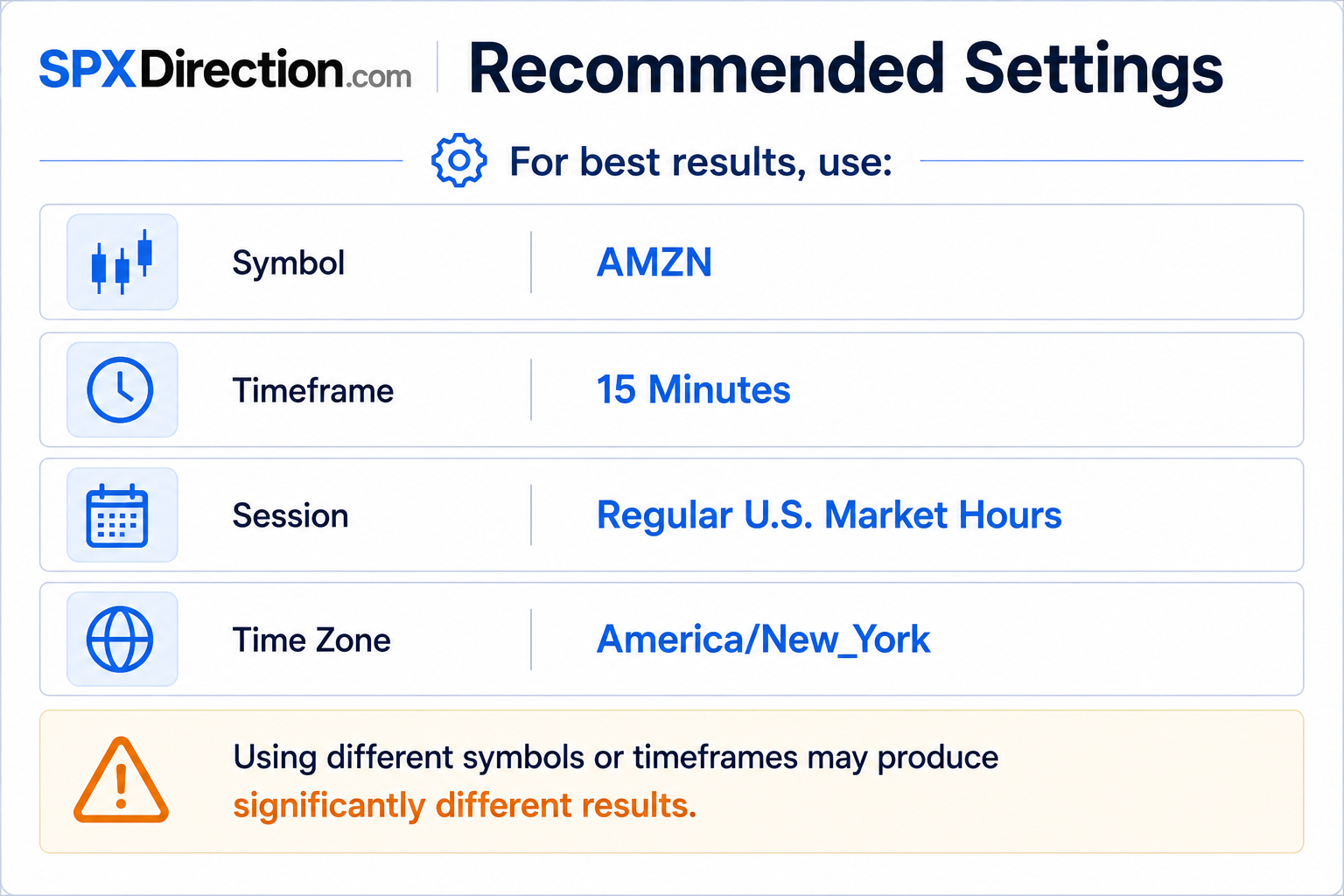
For best results, use:
- Symbol: AMZN
- Timeframe: 15 Minutes
- Session: Regular U.S. Market Hours
- Time Zone: America/New_York
Using different symbols or timeframes may produce significantly different results.
Important Notes
This strategy is designed to provide a consistent, rules-based approach to intraday trading. While it has been developed and tested using historical market data, past performance does not guarantee future results.
Always test any trading strategy thoroughly and use appropriate risk management before trading with real capital.
This strategy is provided for educational and research purposes only and should not be considered financial advice.
